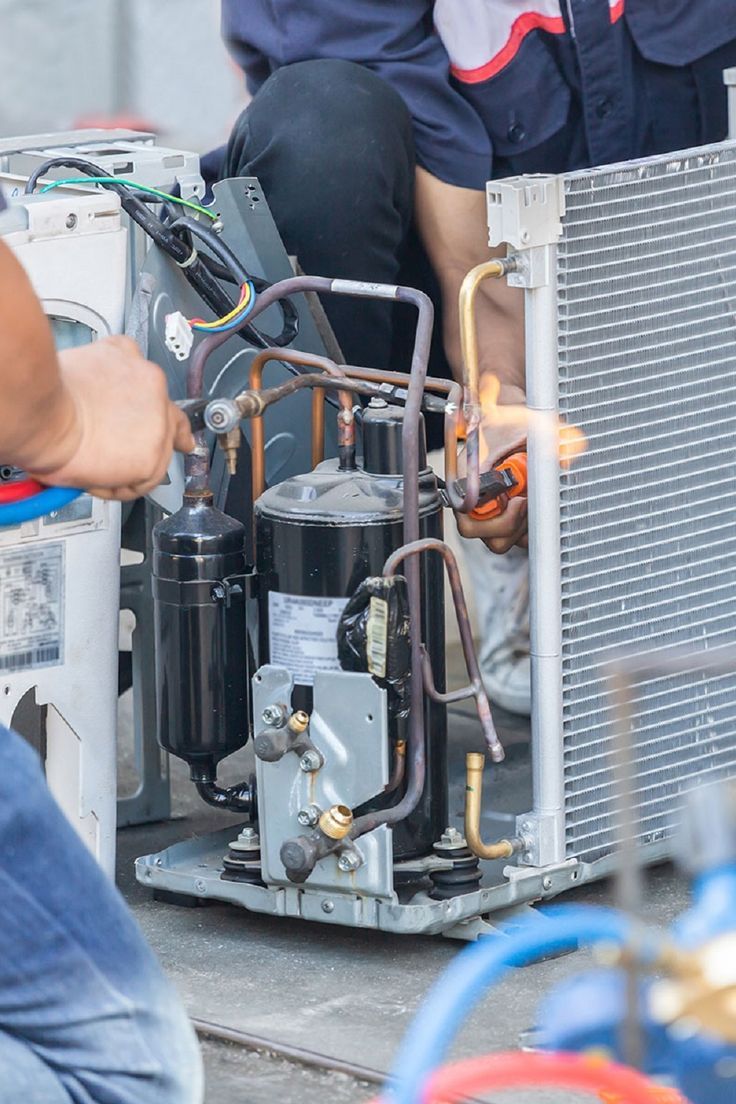
When your AC blows warm air, or your furnace won’t start, the cause is often one small part that has worn out. Knowing which HVAC repair parts fail most often, what they cost, and where to find them can help you understand the problem and avoid overpaying for the fix.
This guide covers the most common parts, how to find the right one for your system, and when to leave the job to a professional.
What Are the Main Parts of an HVAC System?
An HVAC system has dozens of components, but most repairs involve a handful. Here are the main ones:
| Part | What it does | Common sign of failure |
|---|---|---|
| Capacitor | Gives motors the jolt to start and keep running | Humming noise, system won’t start, fan not spinning |
| Contactor | Switches power on to the compressor and outdoor fan | Unit won’t turn on, or won’t turn off |
| Condenser fan motor | Moves air across the outdoor coil to release heat | Warm air indoors, fan not spinning |
| Blower motor | Pushes air through the ducts to your rooms | Weak airflow or no airflow |
| Thermostat | Tells the system when to heat or cool | Wrong temperature, system cycles oddly |
| Igniter | Lights the burner in a furnace | Furnace clicks but never heats |
| Flame sensor | Confirms the burner is lit | Furnace starts, then shuts off |
| Pressure switch | Checks proper venting before the furnace runs | Furnace won’t start, error codes |
| Capillary/expansion valve | Controls refrigerant flow | Poor cooling, icing on the coil |
| Air filter | Traps dust and protects the system | Poor airflow, higher bills |
What Are the Most Common HVAC Repairs?
Most service calls come down to a short list:
- Failed capacitor. It’s one of the most common and least expensive repairs.
- Worn contactor. Pitted contacts can keep the AC from starting.
- Dead fan motor. Heat and age wear out motors.
- Dirty or clogged filters and coils. These cause weak airflow and freezing.
- Faulty thermostat. This can be a wiring issue or a dead unit.
- Bad igniter or flame sensor. These cause most no-heat furnace calls.
- Refrigerant leaks. These need a certified technician.
- Clogged condensate drain. This can cause water leaks and shutdowns.
If your system has one of these symptoms, our HVAC repair team can diagnose it quickly, and you can read more about air conditioning repair or heating repair.
How Much Do HVAC Repair Parts Cost?
Prices vary by brand, size, and whether the part is OEM (made by your system’s manufacturer) or universal. As a general guide:
- Capacitors: often in the range of $15 to $25 for the part
- Contactors: often around $12 to $15
- Fan motors: commonly $75 and up, depending on size and brand
- Igniters, switches, sensors, and filters: can range from a few dollars to over $100
Remember that the part is only one piece of the bill. Labor, diagnostic time, and any additional repairs also affect the total. A cheap part can still lead to a bigger repair if it failed because of another problem, like an overheating motor.
How to Find the Right HVAC Part
Using the wrong part can damage your system, so match the details exactly:
- Find the data plate. It’s a label on the unit that lists the brand, model number, and serial number.
- Write down the electrical ratings. For capacitors, this means the MFD (microfarad) value and voltage. For contactors, it means the amperage and coil voltage. For motors, horsepower, RPM, and voltage.
- Look up the part number. Many manufacturers publish parts lists and diagrams by model number.
- Compare OEM and universal options. OEM parts are an exact match. Universal parts can cost less, but they must meet the same specs.
- Take a photo of the old part before removing it, and compare it to the new one.
Searching by model number is the fastest way to find a parts list or diagram for your exact system.
Where Can You Find HVAC Parts?
You have a few options:
- HVAC supply houses. These are the places technicians use. They stock OEM and universal parts and can often help match a part by model number.
- Online retailers and parts stores. Many offer parts lookup tools and catalogs, but make sure the seller lists the exact specs.
- Manufacturer dealers. These are the best source for brand-specific parts.
- Big-box home improvement stores. They carry common parts like capacitors, filters, and thermostats.
Some supply houses only sell to licensed contractors, and refrigerant can only be bought and handled by certified technicians.
Can You Replace HVAC Parts Yourself?
Some tasks are safe for homeowners, like changing air filters, replacing a thermostat battery, or clearing a condensate drain. Others are not:
- Capacitors can hold a dangerous electrical charge even after the power is off.
- Refrigerant work requires EPA certification and special tools.
- Gas furnace repairs involve fuel and venting risks.
- A wrong diagnosis can mean replacing parts that weren’t broken.
If a repair involves electrical components, gas, or refrigerant, it’s safest to call a licensed technician. They can also catch related problems, so one failed part doesn’t take down another.
Repair or Replace: The $5,000 Rule
If you’re unsure whether to keep paying for repairs, the $5,000 rule is a quick check:
Multiply the age of your system by the estimated repair cost. If the result is more than $5,000, replacement may be the better choice.
For example, a 10-year-old system with a $600 repair comes to $6,000, which suggests replacing. A 5-year-old system with the same repair comes to $3,000, which suggests repairing.
This is a rule of thumb, not a law. Also consider:
- How often the system has needed repairs
- Energy bills that keep rising
- Whether the system uses an older refrigerant that is being phased out
- Comfort problems like uneven temperatures
If replacement looks like the better move, see our HVAC installation and air conditioning options.
Signs You Need Professional HVAC Repair
Call a technician if you notice:
- The system won’t start or keeps shutting off
- Warm air from the AC or cold air from the furnace
- Loud grinding, buzzing, or banging
- Ice on the refrigerant lines or coil
- Burning smells or tripped breakers
- Poor airflow, which may point to air duct problems
Frequently Asked Questions
What are the most common HVAC repairs?
Failed capacitors, worn contactors, bad fan motors, thermostat problems, igniter and flame sensor failures, clogged filters or drains, and refrigerant leaks.
What are some HVAC parts?
Common parts include the capacitor, contactor, condenser fan motor, blower motor, thermostat, igniter, flame sensor, pressure switch, expansion valve, compressor, evaporator and condenser coils, and the air filter.
Where can I find HVAC parts?
Check HVAC supply houses, online parts retailers, manufacturer dealers, and home improvement stores. Use your model number and electrical ratings to find the right match.
What is the $5,000 rule in HVAC?
Multiply the system’s age by the repair cost. If the total is over $5,000, replacing the system may make more sense than repairing it.
How do I find HVAC parts by model number?
Locate the data plate on your unit, note the model and serial numbers, and search the manufacturer’s parts list or a parts retailer’s lookup tool.
Are universal HVAC parts as good as OEM parts?
They can work well when they match the exact specs of the original, but OEM parts guarantee fit. Check ratings carefully before buying.
Is it safe to replace an HVAC capacitor myself?
It’s risky. Capacitors can hold a charge after power is shut off, so most homeowners should leave this to a professional.
Can a failed part damage the rest of the system?
Yes. A failing capacitor or fan motor can strain the compressor, which is far more expensive to replace.
Need Help With HVAC Repairs?
If your system is acting up and you’re not sure which part is the problem, Finishline Air Conditioning & Heating can find the cause and fix it right the first time. See our AC & heating repair service, or contact us to book an appointment. You can also learn more about us on our home page.
This article is for general information only. Prices are estimates and vary. Electrical, gas, and refrigerant work should be done by a licensed professional.